
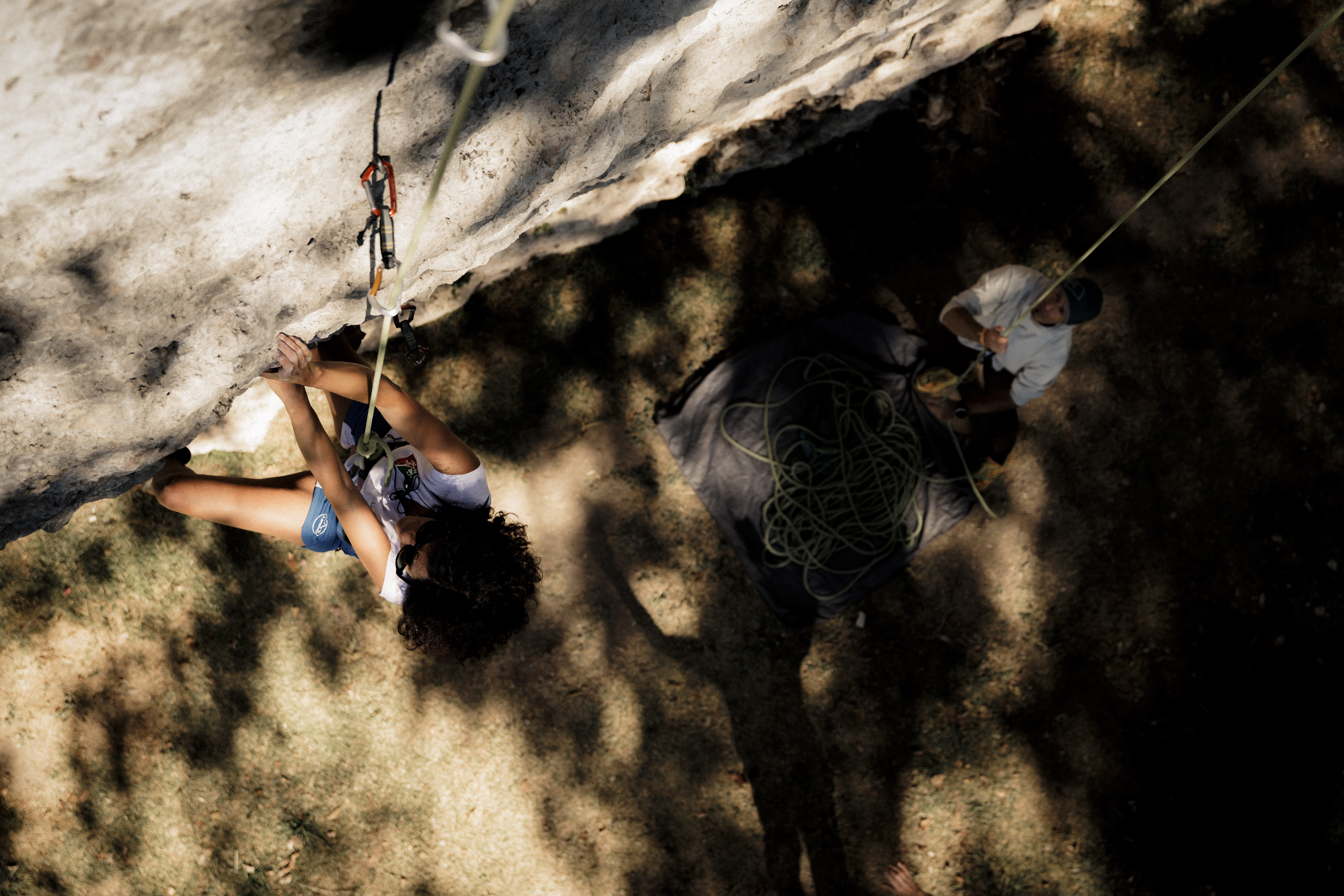
“When I lie in bed in the morning, feeling tired and worn out by everyday life, I think of the athletes I work with. I think of the climber with paraplegia who makes his first climbing moves from his wheelchair. I think of Nadia, a blind climber, who reaches new heights together with her climbing partner Sonia. Their determination reminds me of how much is possible when you simply begin – and give it a try.”
Luca Montanari, ORTOVOX Ambassador
Walls are tall, strong, seemingly insurmountable. They separate us from what’s beyond them, from the impossible, from what we long for but just can’t seem to reach. There’s no getting around them, no going through them. Yet they can be conquered – through courage, self-confidence, and by rising above ourselves. By fighting them, not giving up, growing in the face of them, and ultimately overcoming frustration and failure to surmount them.
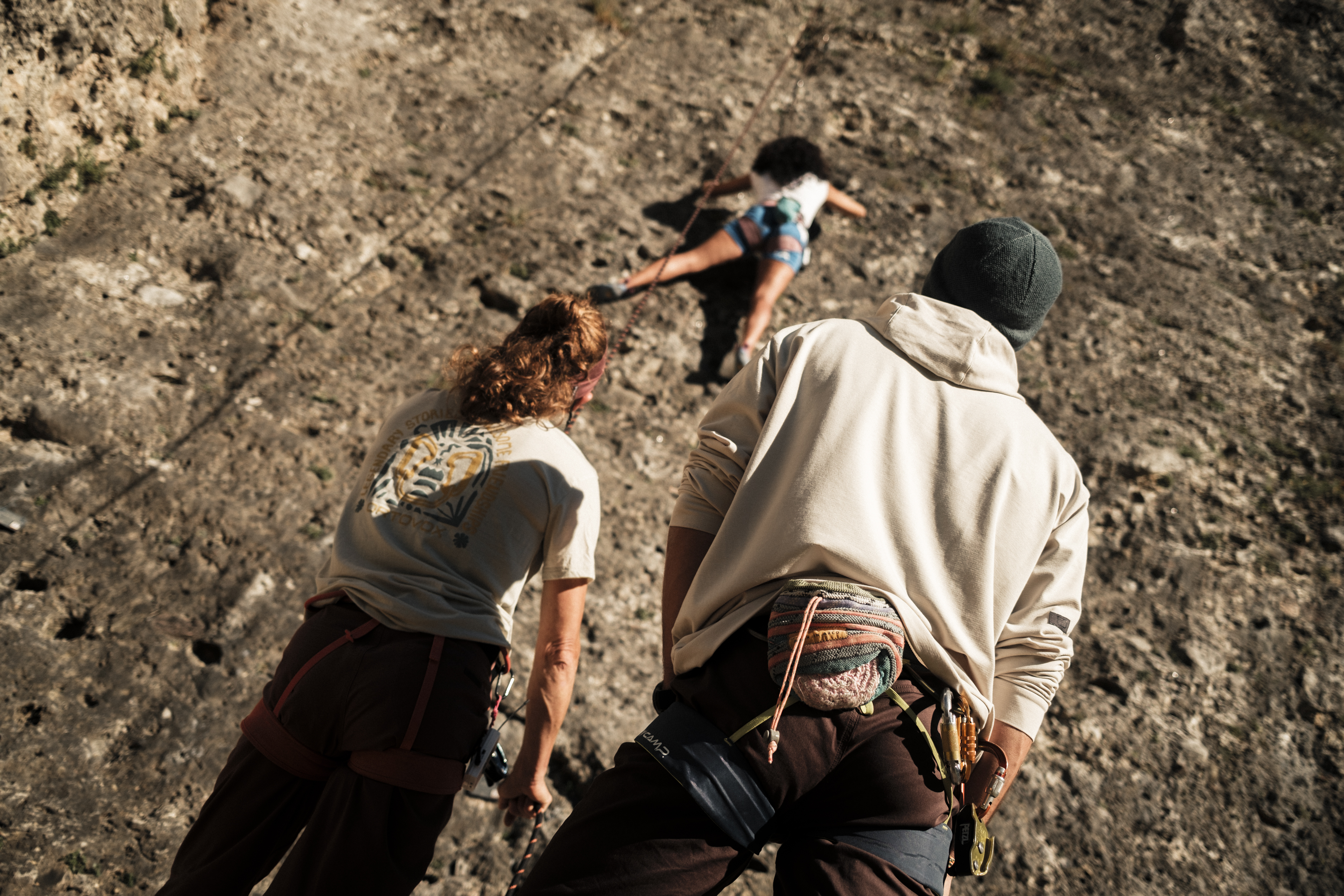
And in doing so, we can overcome ourselves. Helping people overcome their own personal walls – that’s the life mission of Luca Montanari, mountain guide and mental coach for, among others, the Italian national paraclimbing team. As a mountain guide, he not only supports his athletes physically in achieving their goals. Trained as a mental coach, he focuses primarily on the people – the human beings behind the athletes, the professionals, the high-performance competitors. And since 2019, he has been working especially with the climbers of the Italian national paraclimbing team.
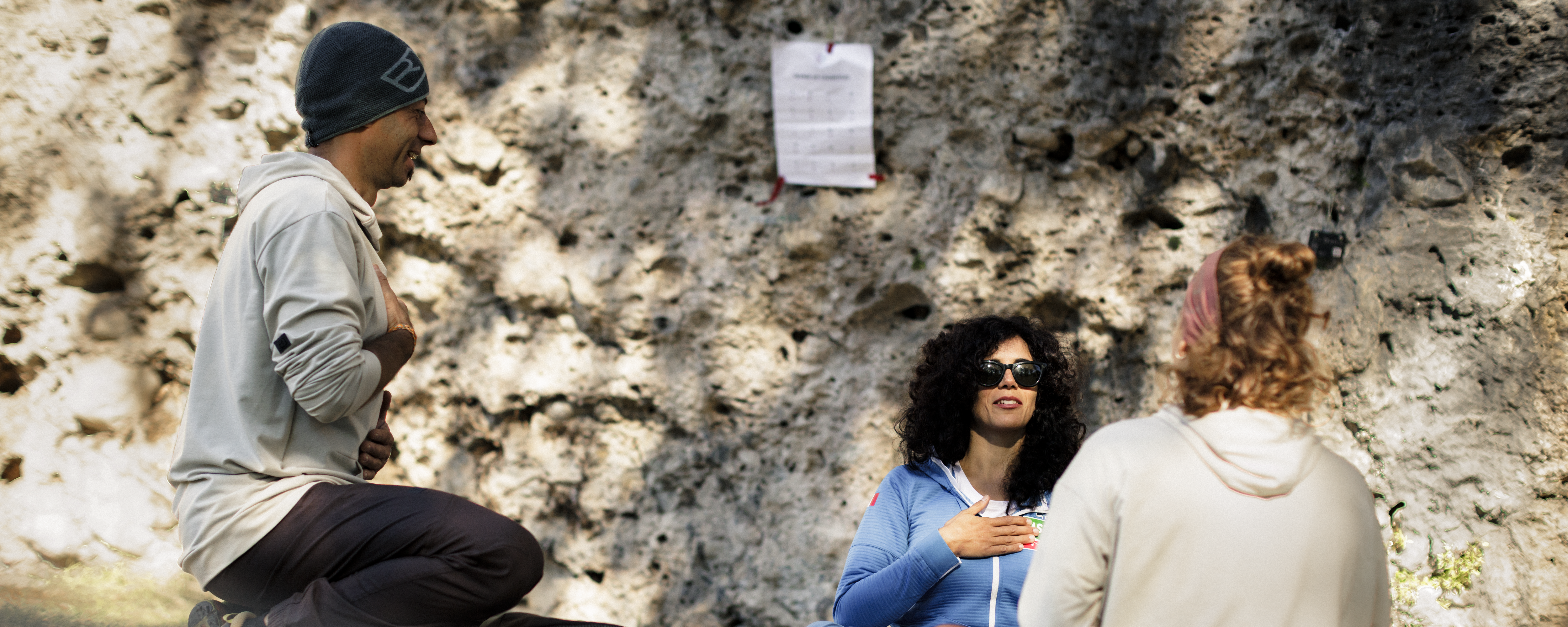
44-year-old Luca, a thoughtful Italian with a calm demeanor, talks about his life. About how he discovered his passion for the mountains and climbing. All of this came from his Dad – a man who took him skiing as a child, venturing deep into the woods on long expeditions. The Dad he lost too soon.
He also talks about the chance encounter that drew him to the climbing gym back then. About how his pain and fear led him to the wall. As an insecure child who had just lost one of his parents, he found something there that truly helped him grow. Every grip, every route on the wall gave him more confidence, raising him up to surpass himself. Fear turned into self-confidence. The wall shrank, Luca grew.
From that point on, Luca saw only one path for himself – into the mountains, to his “true teachers.” At the age of just 14, accompanied by a mountain guide, he climbed in the Dolomites for the first time – and was fascinated. Not just by the climbing itself, but by the mountain guide – someone who climbed the vertical rock faces with such confidence and told him tales of summits and adventures. This inspired Luca – and it made him want to become a mountain guide himself.
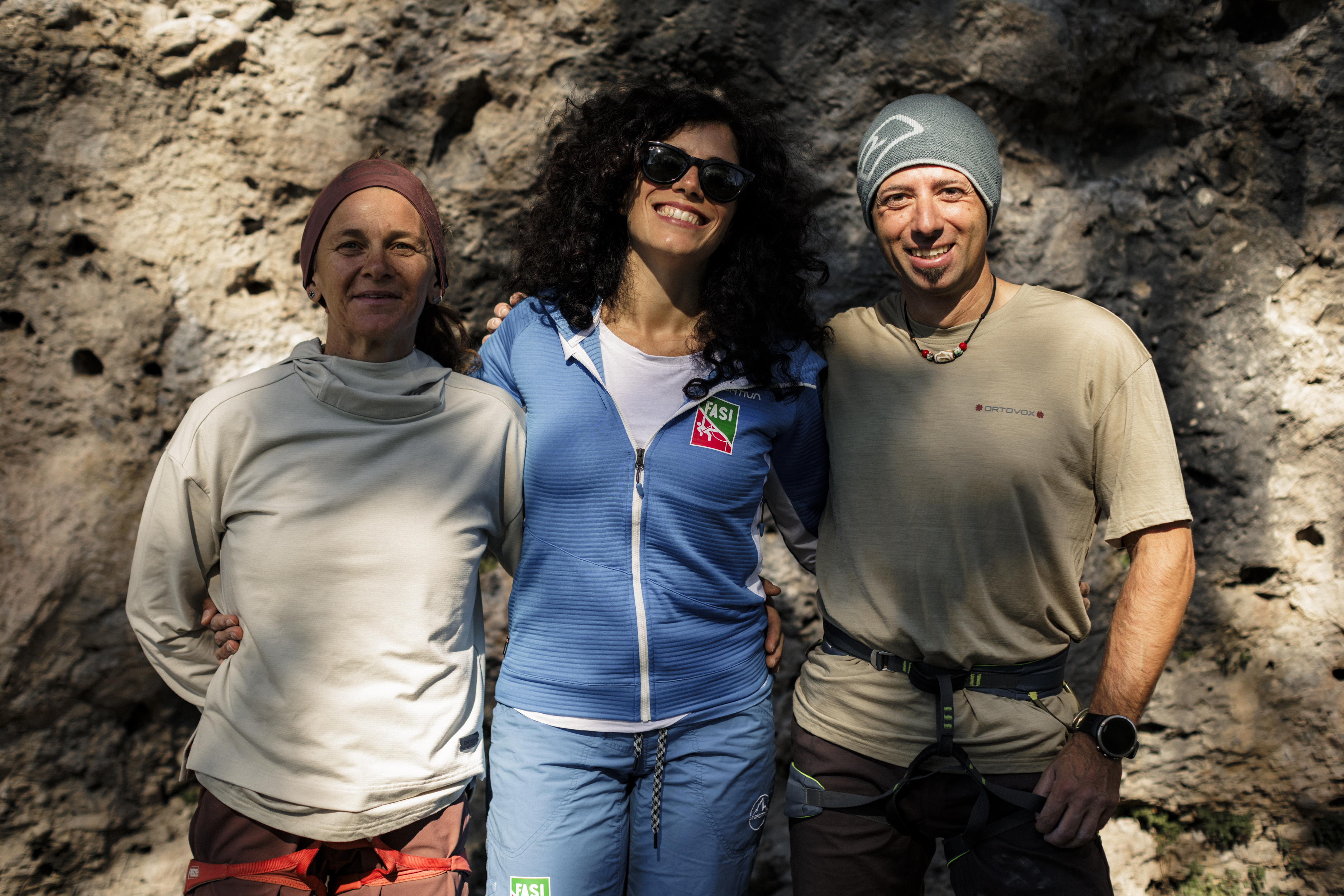
He continued to gain experience in the mountains – on skis, on rock faces, on ice – joined the mountain rescue service and, in his early 20s, finally felt ready to take the entrance exam for mountain guide training. But shortly before the exam, he had a fall while climbing, breaking his foot in the process. And something in his self-confidence broke too. Returning to rock faces proved difficult. Although his body healed quickly, a new wall had sprung up inside him. One he thought he had long forgotten. One made of fear, self-doubt and insecurity. When your body carries you upward, but your mind pulls you downward, the outcome is inevitable. Luca realized that it would take more than just physical training to overcome this wall.
He started focusing on himself – on what was going on inside him – and on his fears. Without any practical support, he tried to rebuild his lost confidence and courage by finding the necessary resources within himself, piece by piece. And he succeeded. He finally passed the selection test and commenced his training, which led to him becoming a mountain guide in 2008.
This experience shaped him. It showed Luca that the most important thing is to understand yourself, to listen to your own body, to trust it, and to be clear about the motivations that drive you as a person. Because ultimately, the fight to overcome the wall is really a fight to overcome ourselves. To conquer our own fears and doubts. Once we are able to confront them, we can rise above ourselves.
Luca’s realization is also underlined by other experiences in his life, most keenly on his expeditions: “After acclimatization, our bodies are simply exhausted. They are pushed to their limits. So we need something else to make the impossible possible.”

Luca’s experiences fueled his growing fascination with mental processes and their impact on human performance. He read books, took courses, and trained to become a mental coach. Today, he passes on his experience and knowledge – not only to athletes, but also to executives and entrepreneurs.
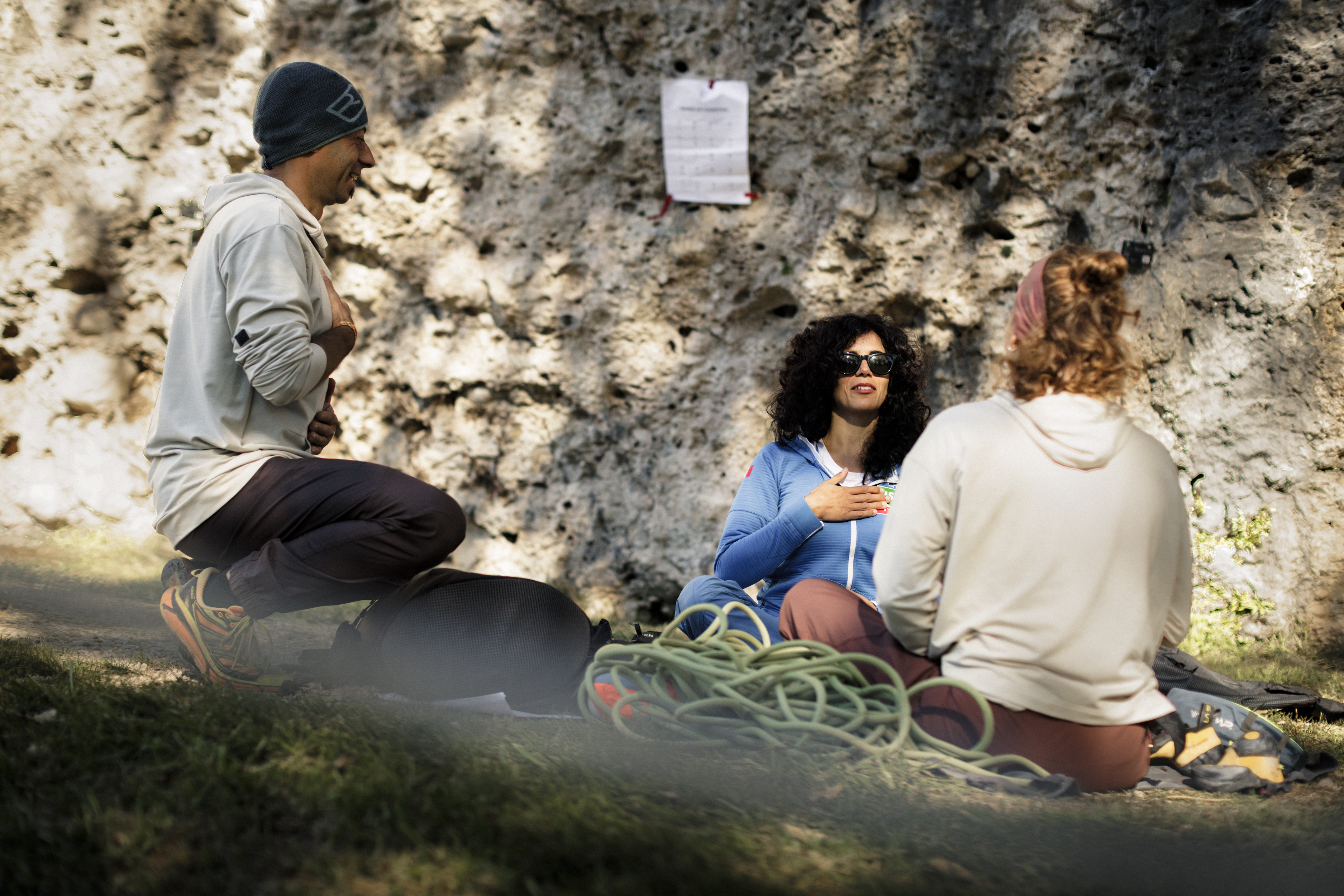
Since 2019, Luca has been working as a mental coach for the Italian national paraclimbing team, something he describes as “a challenge within a challenge.” His training is tailored to the individual needs of the athletes. In addition to neurocognitive exercises, it focuses on the most important aspect of his work: Time. Time for listening, time for talking, and time for collective mindfulness sessions. After all, as Luca points out: “Improving an athlete’s performance starts with strengthening the person within.”
Working with paraclimbing athletes has always been a source of deep inspiration for Luca. Climbing is hard, and for some people there are extra, individual challenges that make it even harder. For some, the wall can seem even higher. But for Luca, overcoming the wall is not just about reaching the top – it’s more about how we approach it internally. It’s about feeling the joy of climbing and having real self-confidence. When his athletes experience this, Luca knows he has done his job well. That’s what real success means to him.
When asked what keeps him going, what motivates him to continue his education and, in his mid-40s, to take up a university degree in sports neuroscience and human performance while also working as a mountain guide and mental coach, Luca smiles knowingly. And he tells a story. The story of how he successfully accompanied his friend Andrea Lanfri, an accomplished mountaineer living with multiple amputations, to the summit of Mount Everest. He was repeatedly told by those around him that it was too dangerous, that he wouldn’t make it, that he was putting himself and Andrea in danger. But Luca was determined to do it. He was determined to help his friend achieve his goals and rise above himself.
Helping people to rise above themselves and achieve their goals is what drives Luca. That’s his reason for doing what he does. And it’s the reason why he never stops, why he keeps striving to rise above himself. Even if this sometimes proves difficult.
“When I lie in bed in the morning, feeling tired and worn out by everyday life, I think of the athletes I work with. I think of the climber with paraplegia who makes his first climbing moves from his wheelchair. I think of Nadia, a blind climber, who reaches new heights together with her climbing partner Sonia. Their determination reminds me of how much is possible when you simply begin – and give it a try.”
We all face our own walls every day – whether it’s a presentation, a competition, or the next difficult climb. Anything that might scare us. We can let fear take hold and be overwhelmed by the sheer magnitude of the wall. Or we can work on our mindset, face our fears, and tackle them head-on. Just like in climbing, we can take it one step at a time – fully focused and present in the moment, letting go of doubt and hesitation and allowing our self-confidence to lift us to new heights.
That’s when we grow – within and beyond ourselves. Until the walls that once felt insurmountable are finally outgrown.